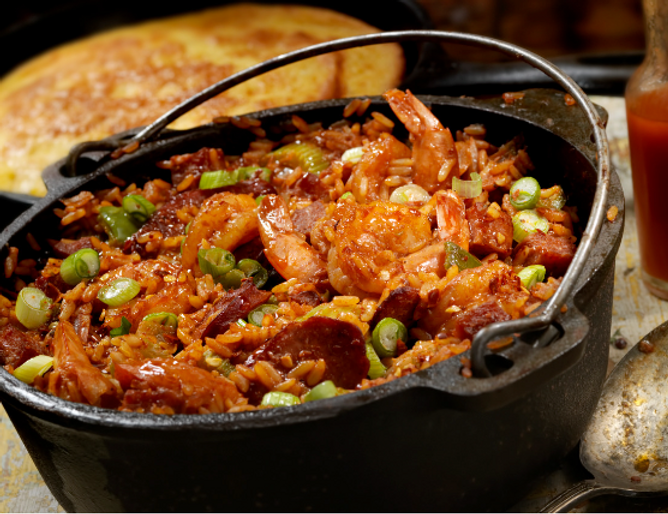
Jambalaya's Journey: A Cultural History of Louisiana's Iconic Dish
Jambalaya. The very word conjures images of vibrant flavors, bustling kitchens, and the rich, soulful essence of Louisiana. More than just a dish, jambalaya is a culinary testament to the state's extraordinary cultural tapestry – a delicious symphony born from centuries of diverse influences. This iconic, one-pot wonder, centered around seasoned rice and an array of proteins, isn't merely food; it's a story simmering in every spoonful, reflecting the historical crosscurrents that shaped the unique identity of South Louisiana.
The Melting Pot Origins of Jambalaya
The journey of jambalaya begins in the 18th century, a period of profound cultural convergence in colonial Louisiana. As European powers vied for control and diverse populations arrived, so too did their culinary traditions. At its core, jambalaya is often seen as Louisiana's answer to Spanish paella, but with distinct local adaptations. When saffron – the costly spice central to authentic paella – proved scarce or unaffordable in the New World, ingenious cooks found flavorful alternatives, leveraging ingredients readily available in the fertile Gulf Coast region.
However, the story doesn't end with Spanish influence. French culinary techniques, brought by settlers and refined over generations, contributed foundational elements, from the art of building flavor bases to specific cooking methods. Crucially, the arrival of enslaved West Africans brought not only their forced labor but also their deep knowledge of rice cultivation and cooking. Dishes like jollof rice, a beloved West African staple, share conceptual similarities with jambalaya, highlighting the profound impact of these rice-cooking traditions on the nascent Creole cuisine. Imagine enslaved cooks, drawing upon ancestral methods, adapting them to new ingredients and conditions, creating something entirely new yet echoing distant homelands.
Adding further layers to this complex culinary DNA were the contributions of local Native American populations, who shared their knowledge of indigenous ingredients and cooking practices, and even German immigrants, whose sausage-making traditions profoundly influenced the array of smoked meats available. This extraordinary confluence of Spanish, French, West African, Native American, and German influences, all occurring within the dynamic environment of colonial Louisiana, laid the groundwork for a dish that truly embodies the spirit of a global melting pot. The secret to a great jambalaya often lies in the depth of flavor developed from these foundational elements, urging cooks to understand the historical context of their ingredients.
Creole vs. Cajun: A Tale of Two Jambalayas
While the core concept of a one-pot rice dish remains, jambalaya famously branches into two distinct culinary traditions: Creole and Cajun. These variations aren't just stylistic choices; they reflect the geographical, historical, and cultural differences between urban New Orleans and rural Acadiana.
Creole jambalaya, often associated with the sophisticated kitchens of New Orleans, is characterized by its signature reddish hue, derived from the generous inclusion of tomatoes. This urban style tends to be milder in spice, allowing a delicate balance of herbs like oregano and basil to shine through. Proteins typically include chicken, sausage (often a milder pork sausage), and shrimp, creating a harmonious blend of textures and tastes. The use of tomatoes also reflects earlier European culinary influences and the availability of fresh produce in the city's markets.
In contrast,
Cajun jambalaya, originating from the more rustic, rural Acadiana region, proudly omits tomatoes. Instead, it achieves a deep, smoky richness through the meticulous preparation of a dark roux, a flour and fat mixture cooked to a rich brown. This style leans into bolder, spicier flavors, often featuring smoked meats like the robust andouille sausage, various cuts of pork, and even game meats like deer or duck, reflecting the hunting and farming traditions of the bayou. Cajun jambalaya is a dish of intense, layered flavors, often starting with browning meats to render fat, which then forms the basis for the roux.
Understanding the nuances between these two styles is key to appreciating the full spectrum of jambalaya's appeal. For a deeper dive into these fascinating regional differences, explore our article:
Creole vs. Cajun Jambalaya: Decoding Louisiana's Culinary Traditions. Whether you prefer the tomato-kissed elegance of Creole or the earthy, smoky depth of Cajun, both variations exemplify the ingenuity and passion of Louisiana cooks.
Unraveling the Name: The Etymological Journey of Jambalaya
The name "jambalaya" itself offers another intriguing chapter in the dish's history. The most linguistically sound theory traces its origin to the Provençal French dialect word "jambalaia" (or its variant "jambaraia"), which literally translates to a "mishmash," "jumble," or "rabble." This etymology perfectly encapsulates the dish's essence: a delightful medley of diverse ingredients, all coming together in a single pot.
This Provençal derivation aligns with southern French culinary traditions of mixed rice dishes that predate the term's appearance in English-language records. French settlers arriving in Louisiana from regions like Languedoc, where Provençal was spoken, likely brought this term with them, adapting its pronunciation within the colonial melting pot. Early print appearances confirm the dish's presence, with "Jam Bolaya" featuring chicken and oysters in the 1878 *Gulf City Cook Book*, and Louisiana-specific recipes later appearing in Lafcadio Hearn's 1885 *La Cuisine Creole*.
While popular folk etymologies sometimes attempt to link "jambalaya" to a fusion of French "jambon" (ham) and West African words for rice like "ya" or "aya," linguistic and chronological evidence largely discredits these claims. Historical dictionaries and primary texts support the Provençal origin, rendering theories about Atakapa phrases or Arabic terms similarly unsubstantiated. The truth, as often happens in linguistic evolution, is more subtle and rooted in documented historical migration patterns and dialectical exchange.
Beyond the Bowl: Jambalaya's Cultural Resonance
Jambalaya is far more than just a meal; it's a cornerstone of Louisiana's social and cultural fabric. From humble family kitchens to grand festival gatherings, it symbolizes community, celebration, and the enduring spirit of the state. It's the ultimate home-cooked comfort food, adaptable to whatever ingredients are on hand, making it a favorite for weeknight dinners and special occasions alike.
Its status as a festival staple is undeniable, perhaps most famously showcased at the annual Gonzales Jambalaya Festival, which has celebrated the dish since 1968. Here, immense cauldrons of jambalaya are stirred by master cooks, feeding thousands and fostering a sense of shared heritage. The dish's popularity even transcended culinary circles, gaining wider national recognition with Hank Williams' iconic 1952 song, "Jambalaya (On the Bayou)," forever cementing its place in American popular culture.
At its heart, jambalaya represents the incredible resilience and resourcefulness of Louisiana's people. It's a dish born of necessity, scarcity, and a profound ability to blend disparate elements into something harmonious and unforgettable. A crucial component in nearly every jambalaya recipe is the "Holy Trinity" – a foundational aromatic base of diced onion, celery, and bell pepper, often sautéed with garlic. This trio, which also forms the bedrock of many other Louisiana dishes, provides an essential flavor profile. To learn more about this vital element, check out
The Holy Trinity & More: Exploring Jambalaya's Core Ingredients & Origins. The beauty of jambalaya lies in its ability to embody history, culture, and flavor all in one pot.
Whether you're making it for a small family dinner or a large gathering, remember that the best jambalaya comes from patience and good quality ingredients. Don't rush the browning of your meats or the sautéing of the Holy Trinity, as these steps build critical layers of flavor. As one Cajun daddy might say, a perfectly crafted jambalaya can earn a special place in any heart, a testament to the dish's profound connection to identity and love in Louisiana.
Conclusion
Jambalaya's journey from an 18th-century adaptation to a global culinary icon is a vibrant testament to Louisiana's unique history. It's a dish that beautifully illustrates how diverse cultures, challenging circumstances, and local ingenuity can converge to create something truly extraordinary. Whether you prefer the tomato-rich complexity of Creole or the smoky, spice-forward depth of Cajun, each spoonful of jambalaya offers a taste of history, a celebration of community, and an invitation to experience the soulful heart of Louisiana. So next time you savor this magnificent dish, take a moment to appreciate the centuries of cultural exchange and culinary passion that brought it to your plate.